
Datamine Network Adds Real Time Arbitrum DeFi Metrics
💡 AI Article Summary
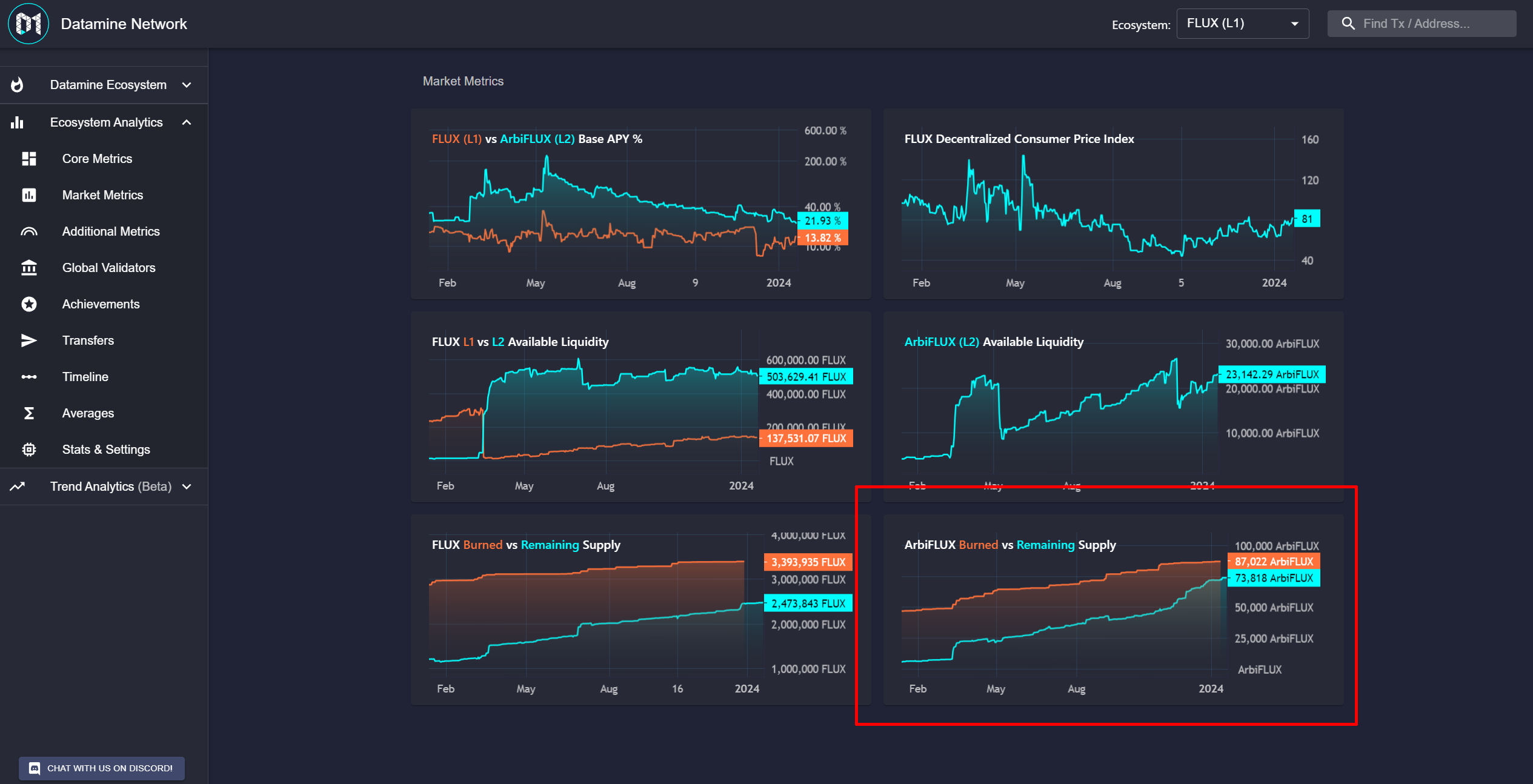
Datamine Network has expanded its decentralized dashboard by integrating 15 new Layer 2 (L2) metrics on Arbitrum. This update provides unmatched on-chain transparency for DAM, FLUX, and ArbiFLUX tokens within a single interface.
Complete Transparency on Arbitrum
To eliminate guesswork and promote deep analytics, the updated dashboard aggregates critical L2 metrics. Users can track the flow of FLUX as it bridges to Arbitrum to mint ArbiFLUX, monitor staking behaviors, and observe real-time dynamic monetary metrics. These features aim to help users visualize the relationship between token lockups, minting yields, and burning incentives.
Obsessive Focus on UX
Over its five-year development history, Datamine Network has prioritized raw data availability. The new dashboard components compile on-chain, immutable data without relying on centralized servers. This upgrade aligns with our ethos of absolute decentralization, offering a seamless user experience that clearly illustrates our ecosystem's dynamic inflation and deflation balance.
🔥We're adding more arbitrum L2 metrics for our DeFi project!
After 4 years of development, we now have 15 powerful metrics to give ultimate transparency into our ecosystem.
Get a complete picture of  DAM,
DAM,  FLUX and
  ArbiFLUX all in one place!
We've been OBSESSED with improving UI/UX to answer all the questions that you have. There is still much more to come as we're not quite done yet... 👀
https://t.co/MBsMTkMliq
Frequently Asked Questions
What tokens are tracked on the Datamine L2 dashboard?
The dashboard tracks DAM, FLUX, and ArbiFLUX, providing clear insights into minting, burning, and cross-chain metrics.
Why did Datamine add L2 metrics for Arbitrum?
This update enhances transparency and improves user experience by offering 15 powerful real-time metrics, allowing users to analyze on-chain data directly on Layer 2 where fees are significantly lower.
How does the Datamine Network maintain decentralization?
The ecosystem runs entirely on immutable, smart-contract-based architectures with no central servers, admin keys, or DAOs, ensuring a highly secure and resilient decentralized monetary system.

 · hodlforjesus · #social-updates