
Datamine Network Launches Combined Multi Chain Staking Analytics
💡 AI Article Summary
Enhancing Multi Chain Transparency
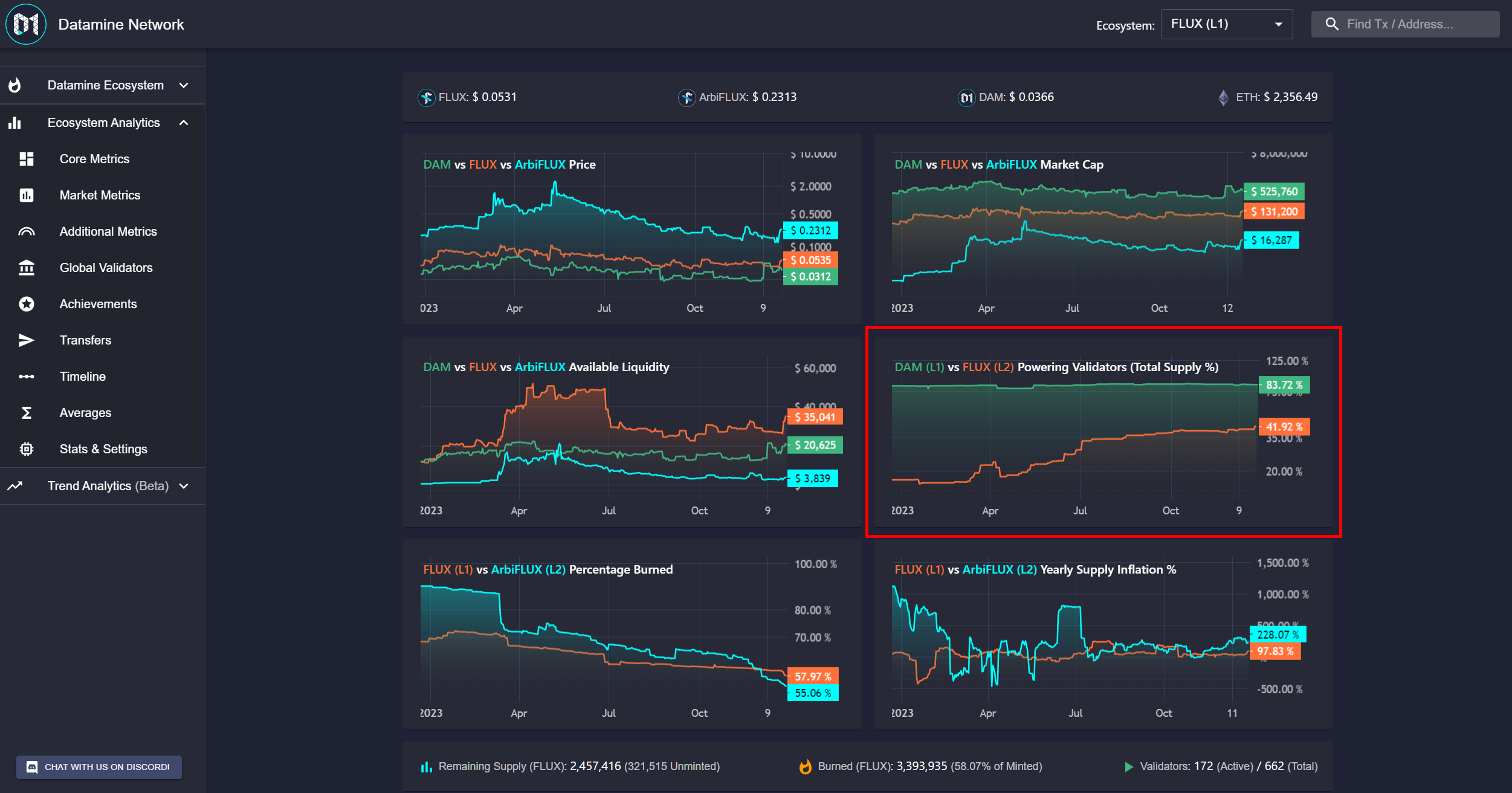
Datamine Network has expanded its real-time DeFi dashboard, introducing a combined chart designed to track ecosystem utility and token locking metrics across both Layer 1 (Ethereum) and Layer 2 (Arbitrum).
Unified Staking Analytics
This new analytical tool allows users to observe the flow of value across the network's multi-tier token model. It visualizes how much DAM is locked to mint FLUX on Layer 1, alongside the volume of FLUX locked to mint ArbiFLUX on Layer 2. According to the latest data, 41.92% of all circulating FLUX is locked to generate ArbiFLUX on Arbitrum.
Real Time On Chain Metrics
In decentralized finance, robust data transparency is paramount. The Datamine development team continues to refine these dashboards to ensure critical economic indicators—including token inflation, available liquidity, and validator participation ratios—remain fully public, immutable, and verifiable in real time.
🔥We're continuing to expand our Ethereum L1 + ArbitrumOne L2 data offerings!
The new combined chart will show you how much  DAM is locked in to mint
  FLUX on L1 and how much FLUX is locked in to mint
  ArbiFLUX on L2!
41.92% of FLUX is now locked in to mint ArbiFLUX!
In DeFI the analytics is king and we've been polishing our dashboards for the past 3 years to ensure all key economic data is visible for everyone in realtime!
Be sure to follow us to see what other metrics are coming! 👌
https://t.co/MBsMTkMliq
Frequently Asked Questions
What does the new Datamine combined chart display?
The combined chart visualizes the exact volume of DAM locked to mint FLUX on Ethereum (Layer 1) alongside the amount of FLUX locked to mint ArbiFLUX on Arbitrum (Layer 2).
How much FLUX is currently locked on Arbitrum?
Currently, 41.92% of the FLUX supply is locked on Layer 2 to mint ArbiFLUX.
Why does Datamine place such a strong emphasis on real-time dashboards?
Real-time, immutable on-chain metrics allow validators and users to monitor token inflation, minting rewards, and ecosystem liquidity without relying on centralized intermediaries.

 · hodlforjesus · #social-updates