Real-Time Ethereum Web3 Integration for Datamine Analytics
💡 AI Article Summary
We have successfully integrated Ethereum Web3 directly into the Datamine Network analytics framework. This critical update allows our system to query and analyze any Ethereum-based smart contract, regardless of its size. For instance, the system can now sync the entire historical ledger of the FLUX utility token in under 30 seconds.
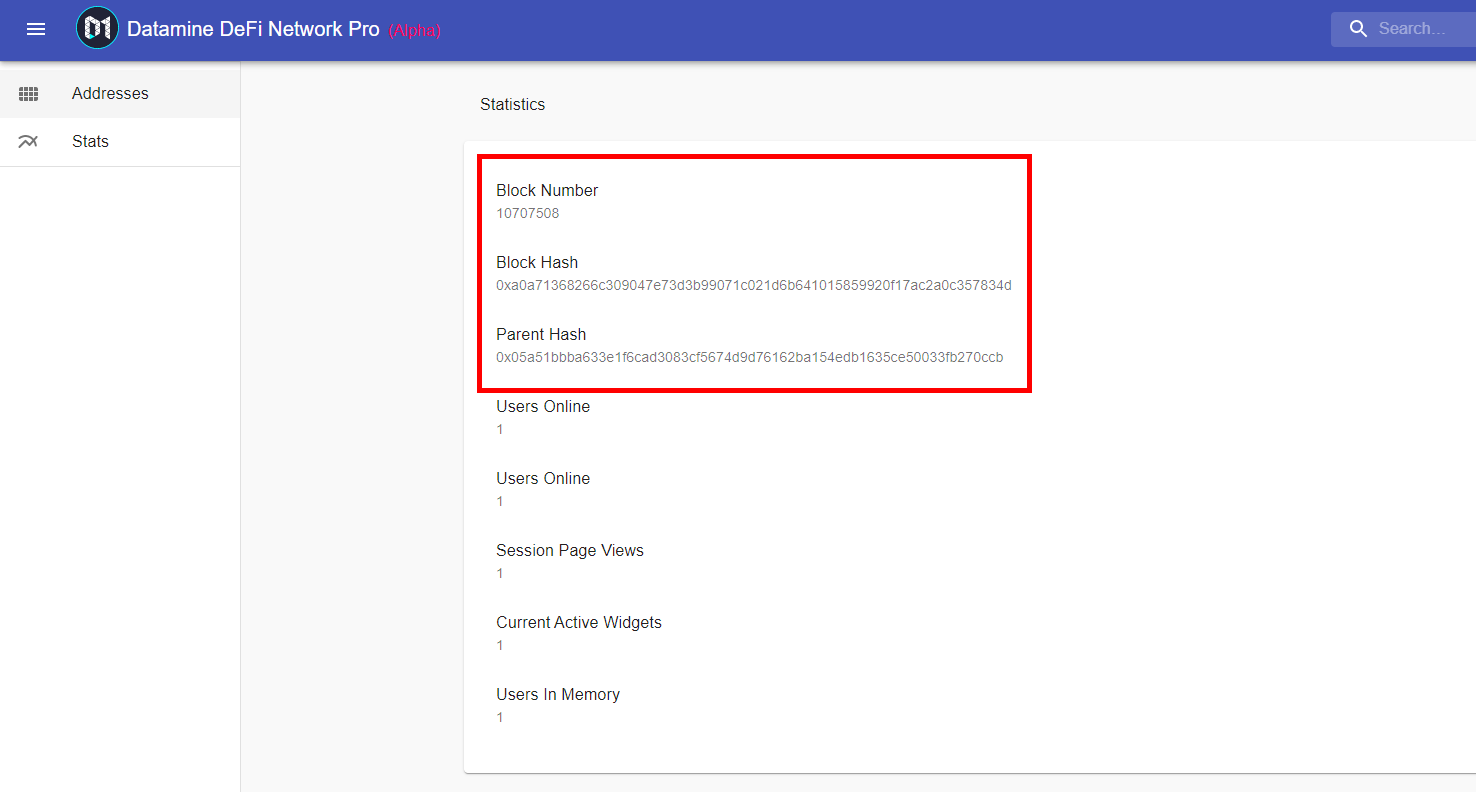
Furthermore, users can now view real-time block metrics—including the latest block number, hash, and parent hash—directly on the stats dashboard without needing browser extensions like MetaMask or Brave.
Containerized Real-Time Syncing
To support complex and heavy smart contracts, we have modularized the syncing process using Docker. Syncing operations now run inside their own isolated Docker containers. By wrapping Ethereum smart contracts into a "Realtime Docker Wrapper," high-volume protocols like Uniswap can run independently. This prevents resource exhaustion and keeps the main analytics platform fast and responsive.
Perfecting the Ledger via Chain Swaps
With real-time streaming Web3 data achieved, our next phase of development focuses on handling longest chain swaps. This is vital for maintaining an immutable, perfect ledger. Because our dashboard tracks real-time running balances, the framework must be capable of processing block reorganizations (reorgs) and rolling back transaction states automatically when a chain split occurs.
Hey guys,
Two long nights of realtime updates to integrate Ethereum web3 directly into our analytics Framework but it was totally worth it. This update comes with a whole slew of core updates including:
Ability to analyze any Ethereum smart contract regardless of it's size (Ex: Uniswap)
Reworked the realtime Ethereum sync to work better with the web3 structure
Faster syncing (We can process the entire history of FLUX in under 30 seconds)
Realtime block updates for stats page. You will see most recent block number, hash and parent hash as soon as they occur WITHOUT need for Metamask
Further split up the code structure. The whole syncing processes now run completely in their own Docker container. This means we can wrap any Ethereum Smart Contract into Realtime Docker Wrapper. So for heavier smart contracts like Uniswap, they can run in their own Docker container while still getting all the realtime benefits.
What is next?
Now that we have realtime Ethereum data we need to be able to handle Longest Chain Swaps. This is critical for perfect ledger because we have a running balance and need to be able to "undo" transactions in there so everything needs to be accounted for.
I will get this build up on Alpha tomorrow so you can check out how we can get you Ethereum data in realtime without Metamask or Brave 👀
https://i.stack.imgur.com/QDrdp.png
Frequently Asked Questions
Do I need MetaMask to view real-time block stats on Datamine?
No. The updated Web3 integration streams real-time block data directly to the dashboard, showing the latest block numbers and hashes without requiring MetaMask or Brave wallet connections.
How does containerizing the syncing process help the Datamine ecosystem?
By isolating the syncing engine into independent Docker containers, heavy smart contracts (like Uniswap) can be processed separately. This modular approach ensures that intense data loads do not slow down other parts of the Datamine Network.
What is the purpose of implementing longest chain swaps?
Longest chain swaps allow the system to handle block reorganizations on Ethereum. This ensures that the analytics engine can undo or reconcile transactions during a fork, maintaining a flawless running balance on the ledger.
 · hodlforjesus · #dev-updates