
Datamine Reduces Ethereum API Calls for Better Scaling
💡 AI Article Summary
Streamlining Decentralized Infrastructure
Maintaining a completely decentralized architecture requires highly optimized blockchain interactions. To improve technical efficiency, the Datamine Network has focused on reducing external Ethereum API calls. By keeping daily API queries under 100,000, we ensure the ecosystem remains highly performant, lightweight, and cost-effective.
Four Iterations of Performance Gains
Over the past month, we implemented four successive versions of frontend and querying optimizations. These updates streamline how the decentralized dashboard interacts with Ethereum nodes. This results in:
- Reduced Latency: Faster loading times across the interface.
- Lower Resource Costs: Less strain on decentralized node providers.
- Long-Term Scaling: Preparation for higher transaction volumes across DAM, FLUX, and LOCK.
These efficiency upgrades ensure Datamine remains entirely serverless, robust, and optimized for sustainable growth.
Hey guys,
I've been talking a lot about "Reducing Number of Ethereum API calls". Seems like a weird thing to work on at the moment where there are other areas of improvements to be made.
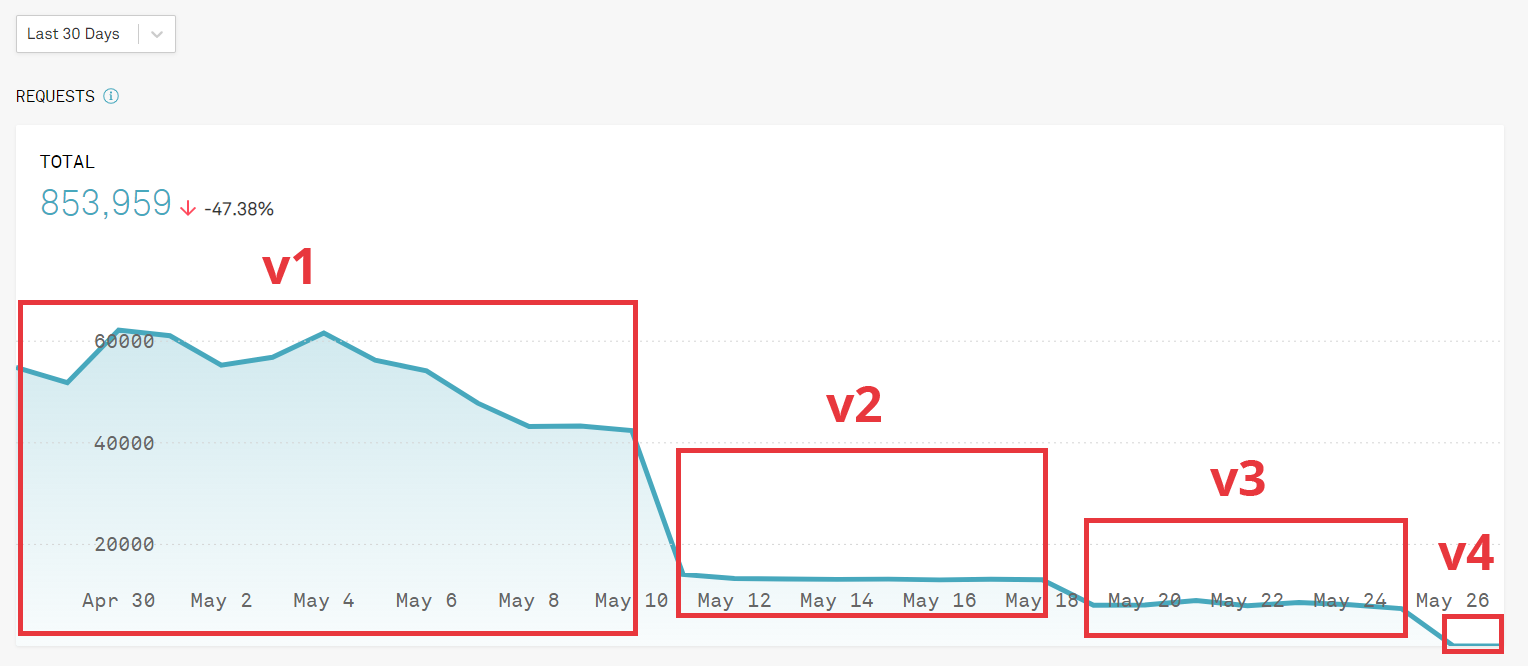
As I mentioned before we want to keep under 100,000 Ethereum calls per day. I just wanted to show you how my work looks like in the past month.
The 4 versions of optimizations that I've made this month can be visualized with this one chart. As you can see our optimizations have greatly paid off and will keep paying us dividends in the months to come! 🔥
Frequently Asked Questions
Why is reducing Ethereum API calls important for Datamine?
Lowering API queries keeps the decentralized dashboard responsive and light. By staying under 100,000 daily calls, the ecosystem avoids RPC rate limits and remains fully functional without centralized server reliance.
Do these API updates affect underlying smart contracts?
No, these optimizations strictly improve how the frontend dashboard fetches data from the blockchain. The underlying smart contracts remain immutable, audited, and secure.
How do these updates benefit validators and users?
Users and validators will experience faster data updates, quicker transaction responses, and a more seamless experience when tracking burns, locks, and yields on-chain.
 · hodlforjesus · #dev-updates